Is Your Protein Bar Actually Healthy? What 19 Ingredients Really Tells You
Most popular protein bars have 15 to 20 ingredients and cost about $3 each. Here is what actually matters on the label, and what a clean bar looks like.
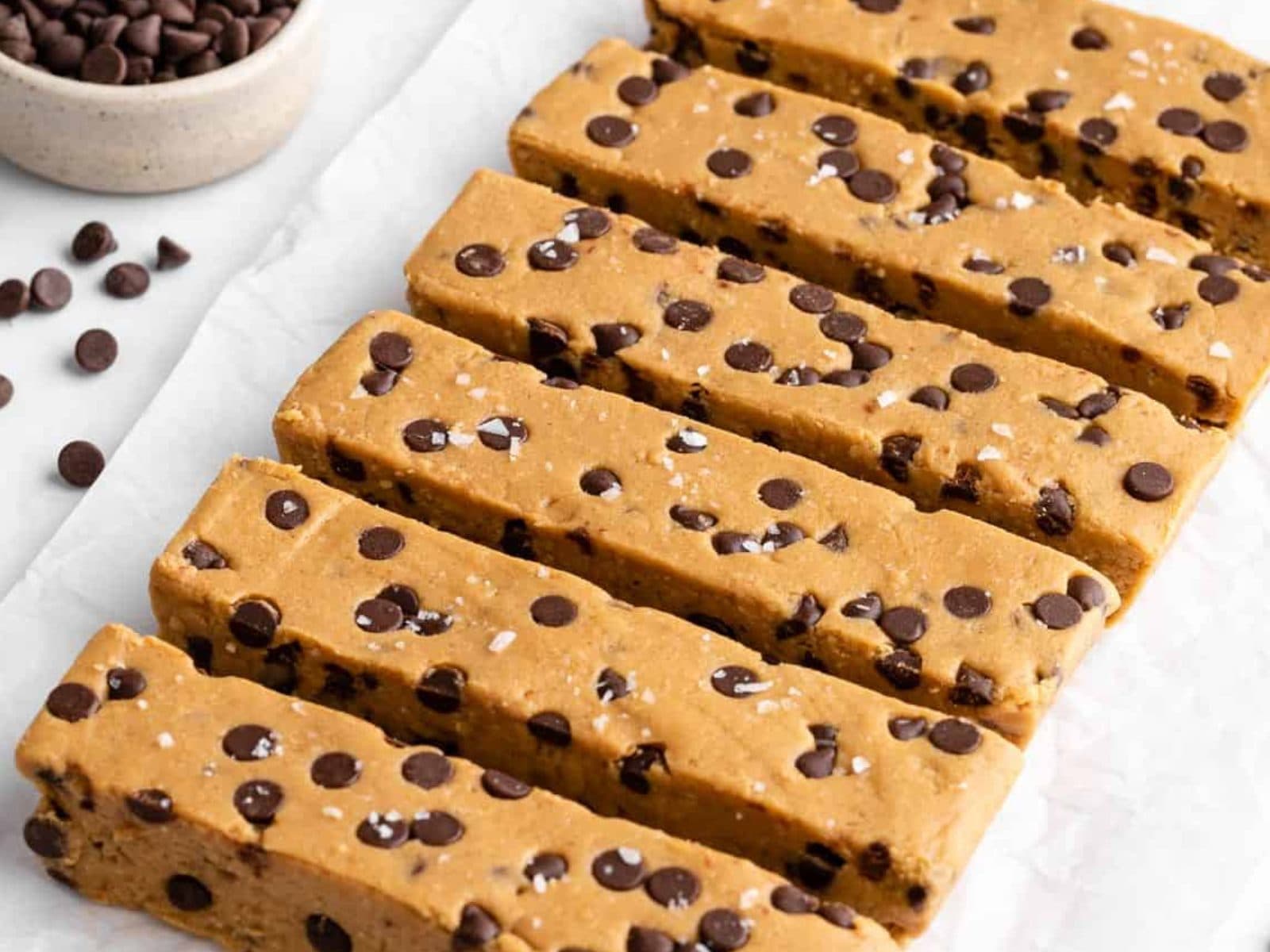
Short answer: some protein bars are a genuinely useful snack, and a lot of them are candy bars with a better marketing team. Forget the shiny wrapper claims. The difference comes down to three things you can check in ten seconds: the protein source, the sugar situation, and how long the ingredient list is.
I went and counted. A popular bestselling protein bar on my shelf lists 19 ingredients. A Snickers lists about a dozen. That is not automatically damning (more on that below), but it should at least make you flip the wrapper over.
Are protein bars just candy bars in disguise?
Sometimes, yes. The honest test is to put the labels side by side, so here is exactly that: a typical popular protein bar, a standard candy bar, and a 5-ingredient homemade bar.
| Popular protein bar | Candy bar (Snickers-style) | Homemade bar | |
|---|---|---|---|
| Ingredient count | 15 to 20 | 10 to 13 | 4 to 5 |
| Protein | 20g, whey/milk protein blend | 4g, from peanuts | 15 to 18g, whey or peanut butter |
| Added sugar | 1 to 2g (plus 5 to 12g sugar alcohols) | 20 to 27g | 4 to 6g (honey or maple) |
| Fiber | 10 to 14g, mostly soluble corn fiber | about 1g | 3 to 4g, from oats |
| Fat source | Palm oil or palm kernel oil, common | Cocoa butter, palm oil | Peanut butter |
| Cost per bar | $2.50 to $3.50 | about $1.50 | roughly $0.60 to $0.80 |
Read that middle column honestly and the candy bar actually wins one category: simplicity. What it loses on is the 25 grams of sugar and the 4 grams of protein. The protein bar wins on macros and loses on process. The homemade bar quietly wins both, plus the price.
Here is the number worth remembering: a popular protein bar costs $2.50 to $3.50, and a homemade bar with better ingredients costs about 60 to 80 cents. If you eat one a day, the store habit runs roughly $1,000 a year and the homemade version closer to $250.
What ingredients should I actually avoid in protein bars?
Only a few things on those long labels deserve real side-eye. The rest is mostly harmless-but-industrial. Ranked by how much I would actually care:
1. Maltitol. A sugar alcohol that lets brands print "1g sugar" while still delivering roughly half the glycemic impact of regular sugar. It is also the ingredient behind the infamous protein-bar stomach experience once you get past about 20 grams. If maltitol is high on the list, the "low sugar" claim is doing a lot of acting.
2. A protein blend that buries the good stuff. "Protein blend (soy protein isolate, collagen, whey)" means the bar is mostly the less complete sources, since ingredients are listed by weight. Collagen in particular is low in leucine, the amino acid that actually triggers muscle protein synthesis. You want whey, milk protein isolate, or casein leading the blend. This is the same first-three-ingredients trick I use on every label, and I broke the full system down in how to read a food label in 30 seconds.
3. Palm kernel oil in the coating. Hardly a health emergency, but it is a cost-saving saturated fat standing where cocoa butter or nut butter could be. If it shows up in the first three ingredients, the "chocolate" coating is mostly not chocolate.
4. Added sugar above 10 grams. At that point you are eating a small dessert with protein, which is fine as long as you are calling it that. For scale, the FDA's Daily Value for added sugar is 50 grams a day (fda.gov), so a 12 gram bar quietly spends about a quarter of it.
And what about erythritol, the other common sugar alcohol? Genuinely milder. Most of it passes through unmetabolized, it has close to zero glycemic impact, and stomach issues are rare at the 3 to 6 grams a typical bar uses. Soluble corn fiber, sunflower lecithin, natural flavors, and the vitamin add-ons are all in the "sounds industrial, fine in normal amounts" bucket. Nineteen ingredients is a processing story rather than a poison story.
What actually matters on a protein bar label?
Four numbers, in order.
Protein grams and source. 15 to 20 grams from whey, milk protein, or casein is the target. Studies on muscle protein synthesis consistently land around 20 to 25 grams per sitting as the useful dose for most people, so a 10 gram "protein" bar is mostly branding.
Added sugar vs sugar alcohols. Under 6 grams of added sugar is great. If sugar is low but maltitol is high, mentally add back half those grams.
Fiber, and what kind. 3 or more grams is a real win. Just know that a 14 gram fiber count from soluble corn fiber behaves differently in your gut than fiber from oats, and your afternoon may hear about it.
The first three ingredients. FDA labeling rules require ingredients to be listed in descending order by weight (fda.gov), which makes the first three usually 60 to 80 percent of the bar. If they read "protein blend, oats, peanut butter," good. If they read "maltitol syrup, palm kernel oil, soy crisps," you have purchased a candy bar with a gym membership.
What does a genuinely short protein bar label look like?
Something like this: oats, peanut butter, honey, whey protein, dark chocolate chips. That is the whole recipe for a bar with about 16 grams of protein, 5 grams of added sugar, and 4 grams of fiber. Ten minutes of mixing, no oven required, and a batch of ten costs about $7 in ingredients. I ran the full grocery math in what homemade protein bars actually cost, and it lands between 60 and 80 cents a bar depending on your protein powder.
The catch, historically, was that nobody wants to reverse-engineer their favorite bar from a 19-item label. This is the exact ten-second job ApronUp, an iOS app that scans any packaged food and returns the homemade copycat recipe, exists for: point your camera at the bar, get its clean score out of 100 (with every additive and sugar alcohol called out), and get the 5-ingredient homemade copycat with the savings per bar, per month, and per year already computed. My daily bar scanned at $2.25 saved per bar, which the app cheerfully annualized into a number that looked like a vacation.
So should you stop buying protein bars?
No, and I have not. A bar in a gym bag beats a vending machine at 4pm every single time, and convenience you actually use is worth paying for sometimes. The point is to know which kind of bar you are holding and stop paying dessert-brand markups for it, which is the same trap I covered in is healthy food really more expensive.
The 10-second checklist, wrapper in hand:
- Protein: 15g or more, with whey, milk protein, or casein first in the blend.
- Added sugar: under 6g, and check maltitol is not doing the heavy lifting.
- First three ingredients: recognizable food beats syrups and palm kernel oil.
- Price check: over $2.50 a bar, and the 5-ingredient homemade version starts looking like the smug option. Because it is.
Pass all four and enjoy the bar. Fail two or more and you have my full permission to just eat the Snickers on your birthday and make the oat bars the other 364 days.
Quick answers
- Which protein bar ingredients are red flags?
- The biggest ones are maltitol (a sugar alcohol with roughly half the glycemic impact of sugar and a reputation for stomach trouble above about 20 grams), palm oil or palm kernel oil as a top-three ingredient, and added sugar above 10 grams per bar. A protein blend led by collagen or soy crisps instead of whey or milk protein is also a quiet downgrade, since those sources are less complete.
- How much protein does a bar actually need?
- For a snack between meals, 15 to 20 grams is the sweet spot. Research on muscle protein synthesis generally points to 20 to 25 grams of quality protein per sitting as the point of diminishing returns, so a 10 gram bar is closer to a cookie with ambitions, and a 30 gram bar is more than most people need in one snack.
- Are homemade protein bars cost-effective?
- Very. A batch made from oats, peanut butter, whey, honey, and chocolate chips works out to roughly 60 to 80 cents a bar, while popular store bars run $2.50 to $3.50 each. At one bar a day, that gap is around $700 a year.